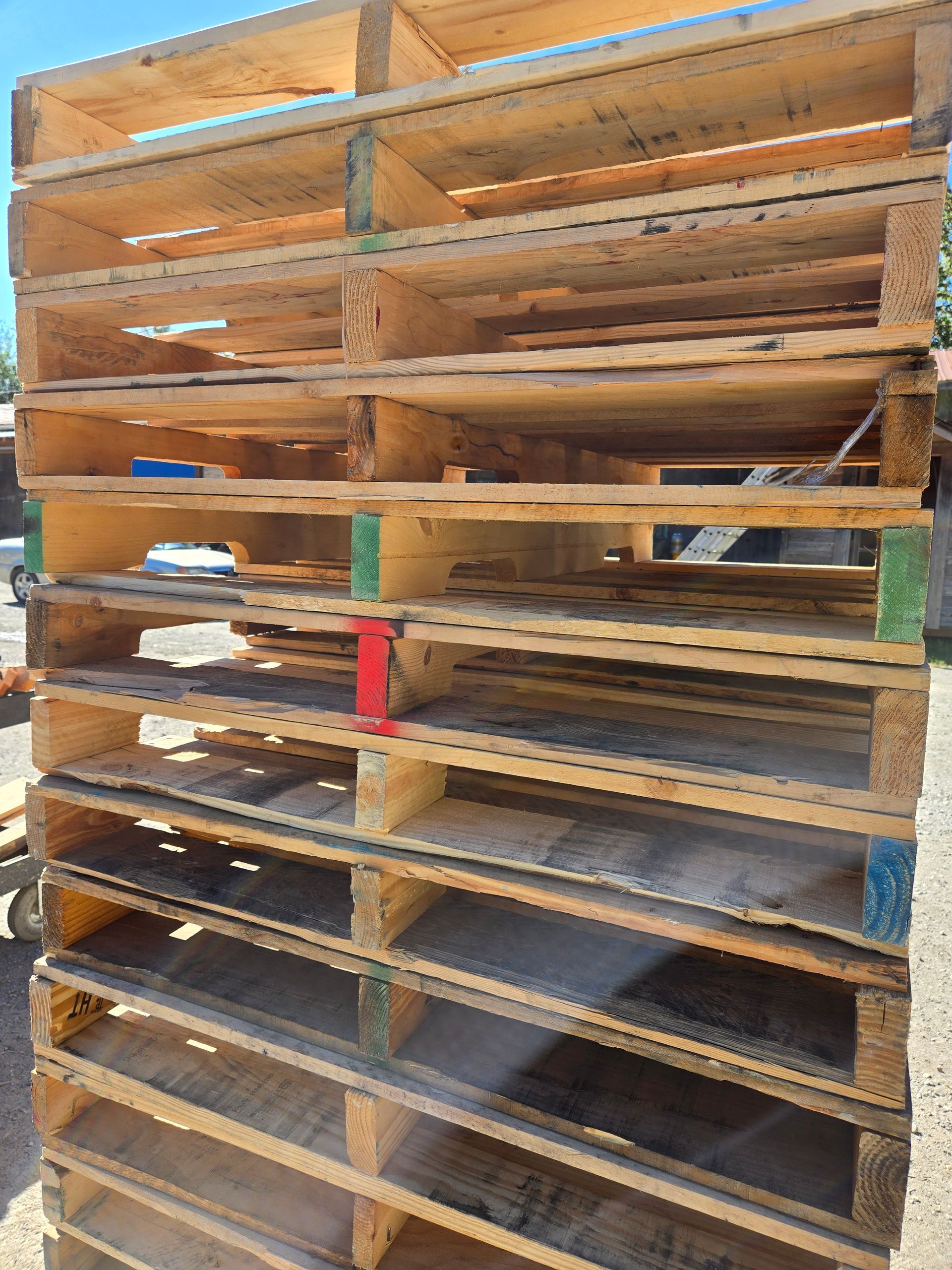
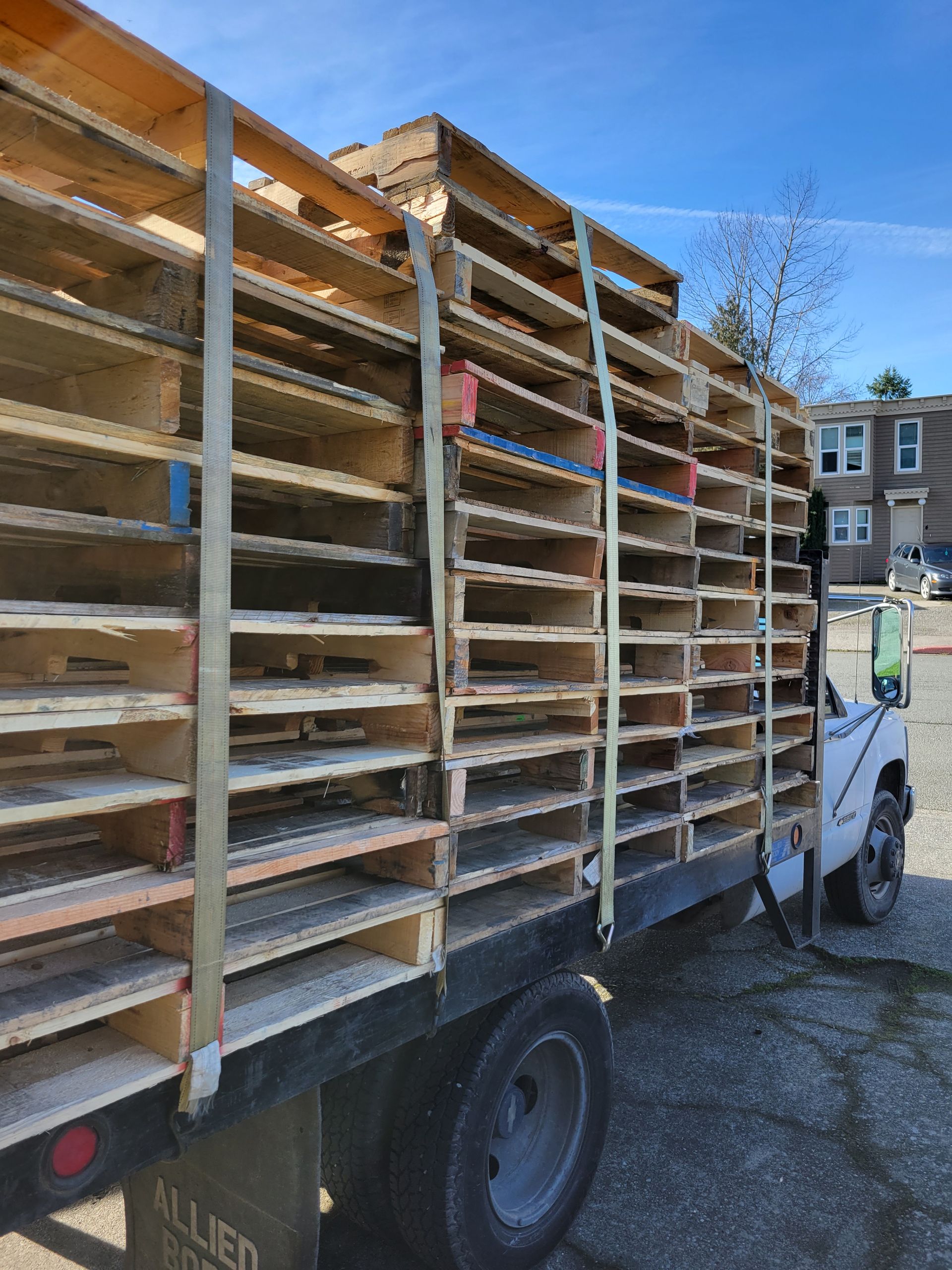
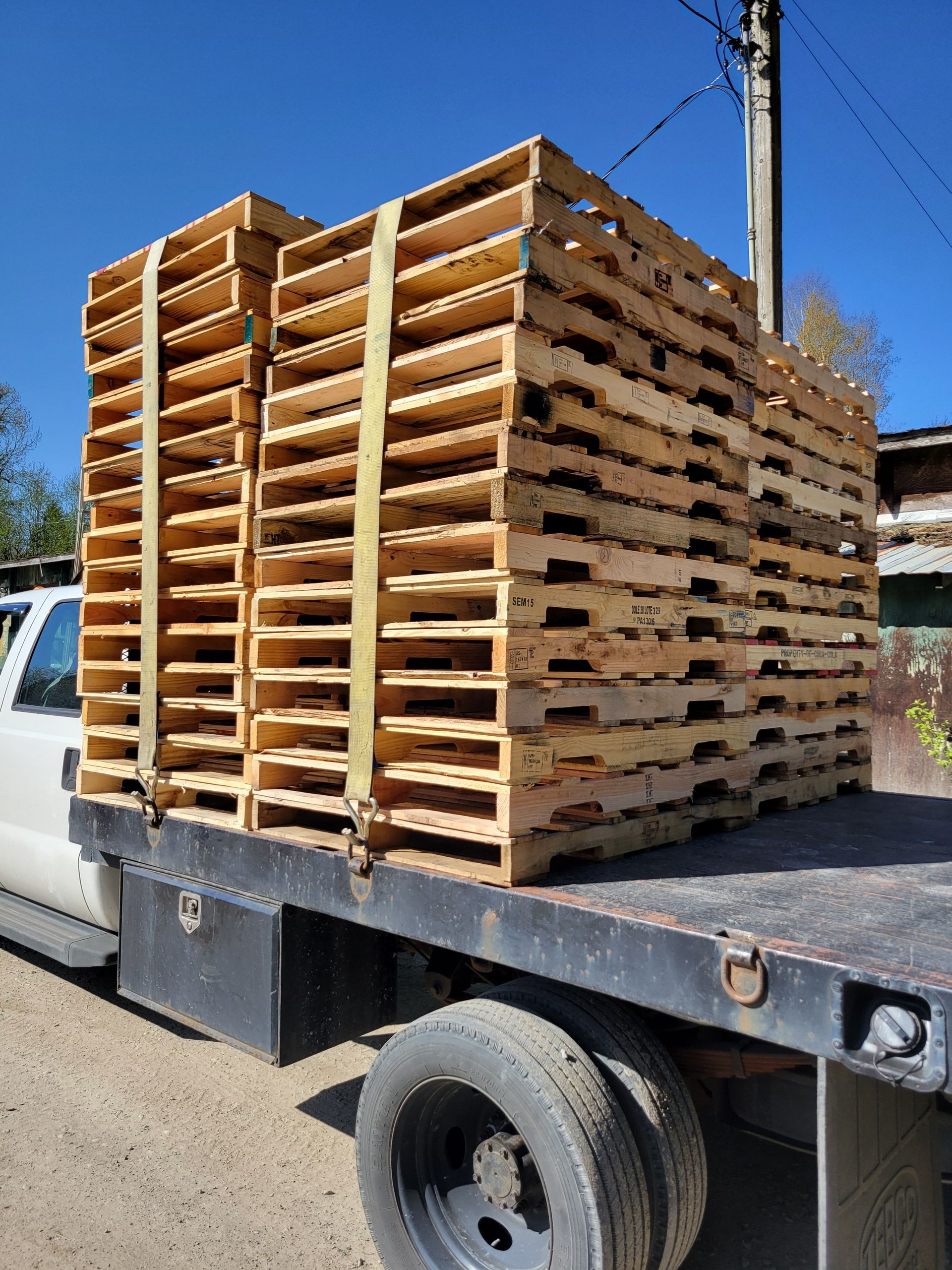
Why Warehouse Managers in Everett Should Choose Recycled Pallets

Rick Stubblebine • June 6, 2025

For warehouse managers in Everett, Washington, making smart operational decisions isn’t just about cutting costs—it’s about optimizing every aspect of supply chain efficiency. One often-overlooked opportunity? Switching to recycled pallets.

The Real Cost Advantage of Recycled Pallets


Recycled pallets offer significant cost savings over new ones, without compromising performance. Most recycled pallets—especially standard 48x40 wood pallets—are just as functional as new, but at a fraction of the price. If you're managing shipping volume, those savings add up fast.


Even better, Everett-area businesses benefit from complimentary delivery on every order. And the more you order, the more you save. Bulk purchasing not only ensures steady supply, but compounds your cost efficiency.


Environmental Responsibility That Pays Off


In a logistics landscape where sustainability is becoming a procurement factor, recycled pallets offer a practical way to meet internal or client-driven environmental goals. Reusing wooden pallets keeps usable materials in circulation and reduces waste sent to landfills.


For businesses aiming to align with green initiatives, choosing recycled pallets is a visible and easy win.


Quality You Can Count On


Not all used pallets are created equal. Our recycled pallets are carefully sorted and graded:


#1 Grade (A Grade): No stringer repairs needed—cleanest, strongest recycled options.


#2 Grade (B Grade): Professionally repaired stringers, fully usable for most shipping needs.


Every pallet is prepped and inspected to ensure it’s ready for real-world logistics.


Local Supply, Fast Turnaround


With a dedicated focus on the Everett, Washington region, we prioritize local inventory, faster delivery times, and customer relationships built on reliability.


Warehouse managers looking for a steady, local source of recycled pallets can expect consistent supply and responsive service.


You might also like

By Rick Stubblebine • September 29, 2026
A pallet delivery usually arrives at the worst possible moment. The truck is at the dock, somebody is waiting on the forklift, and whoever signs for the load has about ninety seconds to decide whether it is fine. Most of the time it is fine. When it is not, the time to find out is while the driver is still standing there, not on Thursday when the pallets are already under product and a container is waiting. This is a short guide to what is worth looking at in those ninety seconds, written for anyone taking in used 48x40 pallets at a dock in North King, Snohomish or Skagit county. Start underneath The most useful thing to know about a used pallet is that its grade is decided underneath it. Running along the bottom of a 48x40 are three 2x4s called stringers. They are what the pallet stands on and they carry the load. The deck boards on top get most of the attention because they are what you see, but a pallet fails at the stringer. That is why the grades work the way they do. A #1 is a used pallet whose stringers have never been repaired. A #2 is one where a damaged stringer has been repaired with a block, a piece of wood cut and nailed in against the break to make it solid again. A #2 costs less because of that repair, and for most work it is a perfectly good pallet. Either grade can carry a replaced deck board. When a #1 has one, you can usually pick it out because the new board is cleaner and newer looking than the ones around it. That does not make it a #2. This is the thing that trips people up most in the pallet business, and it is worth saying plainly: a pallet that looks worn is not automatically a lower grade, and a tidy one is not automatically a higher one. So the first check is the three stringers on a few pallets off the top of the stack. If you ordered #1 and you are looking at blocks nailed into stringers, you did not get what you ordered. Then check the load against the order Obvious, and skipped constantly. Count the load, or a representative part of it if the count is large. Then confirm the footprint is 48x40 and the grade matches what you asked for. It takes a minute, and it is the one minute in the week when a miscount is still fixable by somebody other than you. Smell it This sounds like a joke and it is not. A pallet that has been sitting outside in Washington weather carries water, and water in wood carries mold and odor. If the goods going on top are packaging or anything a customer eventually opens, a musty pallet becomes your problem the moment it leaves your building. Wet wood is heavier and darker than dry wood, and you can often see the line where a stack sat in standing water. Pallets kept indoors do not arrive with this problem, which is why where they were stored is worth asking about, and not only what grade they are. Look at the nails and the stringer ends Two quick things that take a few seconds each. Nails standing proud of a deck board will catch and tear whatever is stretch-wrapped over them. A nail that has backed out is also telling you the board around it has loosened. The stringer ends, where the forks go in, take the most abuse in a pallet's life. Splitting there is the most common way one fails in use, and it is visible from the aisle without turning anything over. Know what happens if you reject one The last check is not on the pallet. It is on the arrangement behind it. Before you sign, know what your supplier does about a pallet you cannot use. Whatever that answer is, it decides who carries the risk on the bad one, and you want to know it on a quiet day rather than on the day it matters. Here, the answer is that anything missing your standard goes back on the next trip and is exchanged, no questions asked. Every delivery also leaves this yard with a few more pallets on it than were ordered, at no charge, which covers the odd one before it turns into a phone call. That is the point of it. A used pallet stops being a gamble when the yard carries the risk of the one that is wrong. What this looks like from our end Everett Pallets and More sells clean used 48x40 pallets, #1 and #2, sorted and stored indoors at the yard in Lake Stevens, just east of Everett. Stock turns over quickly here, so what arrives is fresh rather than aged yard wood. $6 a pallet picked up, with no minimum quantity. $8 to $13 a pallet delivered across North King, Snohomish and Skagit counties depending on how many you need, and that per-pallet figure is the whole delivered price. There is no separate delivery charge behind it. Orders run from a single pallet up to over five hundred, and local deliveries are often same day. If you want to know the grade before the truck leaves, ask. Somebody here will tell you which one is coming and why. Monday to Friday, 8:00 am to 5:00 pm. (425) 610-8704
By Rick Stubblebine • September 15, 2026
Most people who buy used pallets have never seen the part in the middle. You call somebody, you say a number, and pallets either show up or they do not. That works fine until the day the order actually matters, and then not knowing turns into a morning of wondering whether anything is coming. This is a plain walk through what happens at Everett Pallets and More between the phone call and the pallets landing on your dock. What gets asked, how the number gets filled, when same day is real and when it is not, what arrives on the truck that you did not order, and what happens if something is wrong. It is written for anybody buying used 48x40 pallets in North King, Snohomish or Skagit counties, whether that is four pallets or four hundred. The call The phone gets answered by the person who owns the pallets. That is not a service feature, it is just how a one-yard operation works, and it does shorten things. There is nobody to transfer you to and nobody who has to check with somebody else. Four questions cover most orders. How many. What grade. Picked up or delivered. When do you need them. The number is the easy one, because there is no minimum. Orders here run from a single pallet up to over five hundred. Four is an order. One is an order. A trailer load is an order. What gets asked about grade Grade comes up on the call and it is the shortest part of it. You say #1 or #2, or you say you are not sure. If you are not sure, the most useful thing you can say is not a grade at all. Say what you are putting on the pallet, roughly how heavy it is, where it goes next, and who has to accept it at the far end. That gets you to the right stock faster than guessing does, because a grade only describes the structure underneath and your load is the thing that has to sit on it. Whatever gets agreed on the phone is what leaves the yard. If it arrives and it is still not right for you, that is what the exchange is for, and that comes up further down. Picked up or delivered, and what it costs Picked up at the yard near Everett, a used 48x40 is $6 a pallet. Delivered runs $8 to $13 a pallet depending on how many you take. That per-pallet number is the whole delivered price. There is no separate delivery charge waiting at the bottom of the invoice, which is worth saying plainly because in a lot of trades there is. Pickup is open Monday to Friday, 8:00 am to 5:00 pm. Delivery covers North King, Snohomish and Skagit counties, near Everett as home base and Lynnwood and Bothell on the regular routes. When same day is real Same-day local delivery happens often, and it is the reason most first-time callers call. It is also the thing most worth being honest about. Whether today works depends on what is already on the truck and where that truck is going. If your order fits the day, it goes out the same day. If it does not, you get told the real day instead of a hopeful one. A wrong delivery date is worse than a later one, because you plan around it. If you have a truck and you are short right now, picking up is always the fastest option available. The yard is open until 5:00. What comes off the truck Every pallet has already been through the same sequence before it gets loaded. Sorted, stored indoors rather than out in the weather, and checked for mold and odor. Pallets here are sourced from industries that handle clean goods, and stock turns over quickly enough that it is not aging in a yard somewhere. Two things arrive that are not on the order. Every delivery goes out with a few complimentary pallets on it. And anything that does not meet your standard gets exchanged, no questions asked, which is the part that matters most if you have been burned before. You do not have to argue the grade with anybody. The two things that stop the next call being an emergency Most pallet trouble is not a supply problem. It is a timing problem, found late. Two things exist here for that. The first is the text alert on a standing account: inventory and schedule messages before you run short, so the shortfall becomes a message on a Tuesday instead of a problem on a Thursday. The second is the route-share top-up. When a delivery is already routed to an area, other customers near that road get a text asking whether they need any pallets while the truck is over there. No minimum. The trip is already paid for either way, so a small top-up costs nobody a special run. If you sell pallets rather than use them There is a wholesale side to this as well. If you are a reseller or a distributor who has landed an order bigger than the inventory in your own yard, orders can be filled up to five hundred plus, delivered to your yard or drop-shipped straight to your customer, with tiered pricing by volume. The short version You call, you say a number and a grade, and you say what the pallets are carrying. The order gets filled from indoor stock that has already been sorted and checked. It goes out same day when the day allows it, and you get told straight when it does not. A few extra pallets ride along. Anything wrong comes back. Clean used 48x40 pallets, $6 picked up and $8 to $13 delivered depending on volume, across North King, Snohomish and Skagit counties. The yard is near Everett, open Monday to Friday, 8:00 am to 5:00 pm. (425) 610-8704.
By Rick Stubblebine • September 2, 2026
Somebody orders used 48x40 pallets for the first time, and underneath every other question is the same one: what is actually going to come off that truck. They have heard the word "used" and pictured the worst version of it. A stack of grey wood with a broken board and a smell nobody wants near their product. This is about what the two grades mean at a used pallet yard, why the answer matters before you sign for a delivery, and what you can expect on an order out of Everett. If you buy pallets for a warehouse or a shipping floor, the grade is the difference between a load that goes out on schedule and a pallet you have to pull and replace at the dock while a driver waits. The word "used" is doing too much work Used covers a lot of ground. It covers a pallet that has carried one clean load, and it covers a pallet that sat in a yard through two winters. Both are honestly described as used. They are not the same thing to buy. That is why the trade sorts them, and for almost everything a local buyer needs, two grades handle it. A #1 The cleaner, stronger one. Closer to new. Full boards, nothing repaired in a way that changes how it carries, and it looks like something you would put a customer's product on. If your pallets leave your building and land on somebody else's receiving dock, this is usually the grade, because what shows up there is part of how your company reads to them. A #2 The working grade. It carries the load fine and it shows more wear, with a board or two that has clearly been somewhere. For internal moves and for anything staying inside your own four walls, a #2 does the job, and there is no reason to pay for more pallet than the work needs. Neither one is a compromise. Reuse is not a corner this industry is cutting. Research from the U.S. Forest Service, carried out with the National Wooden Pallet and Container Association, found that about 95 percent of wood pallets are recovered for reuse, repair or recycling rather than scrapped, and that the 48x40 footprint dominates both the new and the recovered market. Buying used is simply how the pallet business works. Where a pallet came from matters more than the number on it A grade tells you the condition. It does not tell you the history, and the history is what decides whether a pallet is a problem after it is in your building. The pallets here come out of industries that handle clean goods. They are stored indoors rather than left outside collecting weather, and every one gets looked at on the sort line and screened for mold and odor before it goes on a truck. That last part is not a small thing. Damp wood in a warehouse is a problem that travels, and a food or pharma receiving department will turn a pallet away on a smell alone. Indoor storage is most of the reason that does not happen. What it costs, plainly $6 a pallet picked up. $8 to $13 a pallet delivered, depending on how many you take. That per-pallet number is the whole delivered price. There is no separate delivery charge underneath it. There is no minimum. One pallet is a real order and so is five hundred, with everything in between. Delivery runs across North King, Snohomish and Skagit counties, and local orders often go out the same day. Buyers say the thing that wears them out is hearing "call for a quote." A shipping manager comparing options at four on a Thursday afternoon does not have a quote cycle in the schedule. A reasonable number they can act on right now is worth more to them than a slightly better one they have to chase for two days. When you are not sure which grade you need Say what the pallets are for. That is genuinely the whole conversation. Product going out to a customer, or internal moves and storage. A single stack for a garage operation, or a standing monthly volume for a production floor. From that, the grade answers itself in about a minute. If a pallet does arrive and it does not meet your standard, it gets exchanged. No questions and no form to fill out. There are also a few complimentary pallets in every delivery, which is less a policy than an acknowledgment that counts are counts and a couple of spares have never hurt anybody. The point You should know what is coming before it arrives. That is the whole of it. A used pallet is a known quantity when the person selling it will tell you the grade, the source and the price without being pushed on any of them. Everett Pallets and More. Everett, serving North King, Snohomish and Skagit counties, Monday to Friday, 8:00 to 5:00. (425) 610-8704