What to check before you sign for a pallet delivery
A pallet delivery usually arrives at the worst possible moment. The truck is at the dock, somebody is waiting on the forklift, and whoever signs for the load has about ninety seconds to decide whether it is fine.
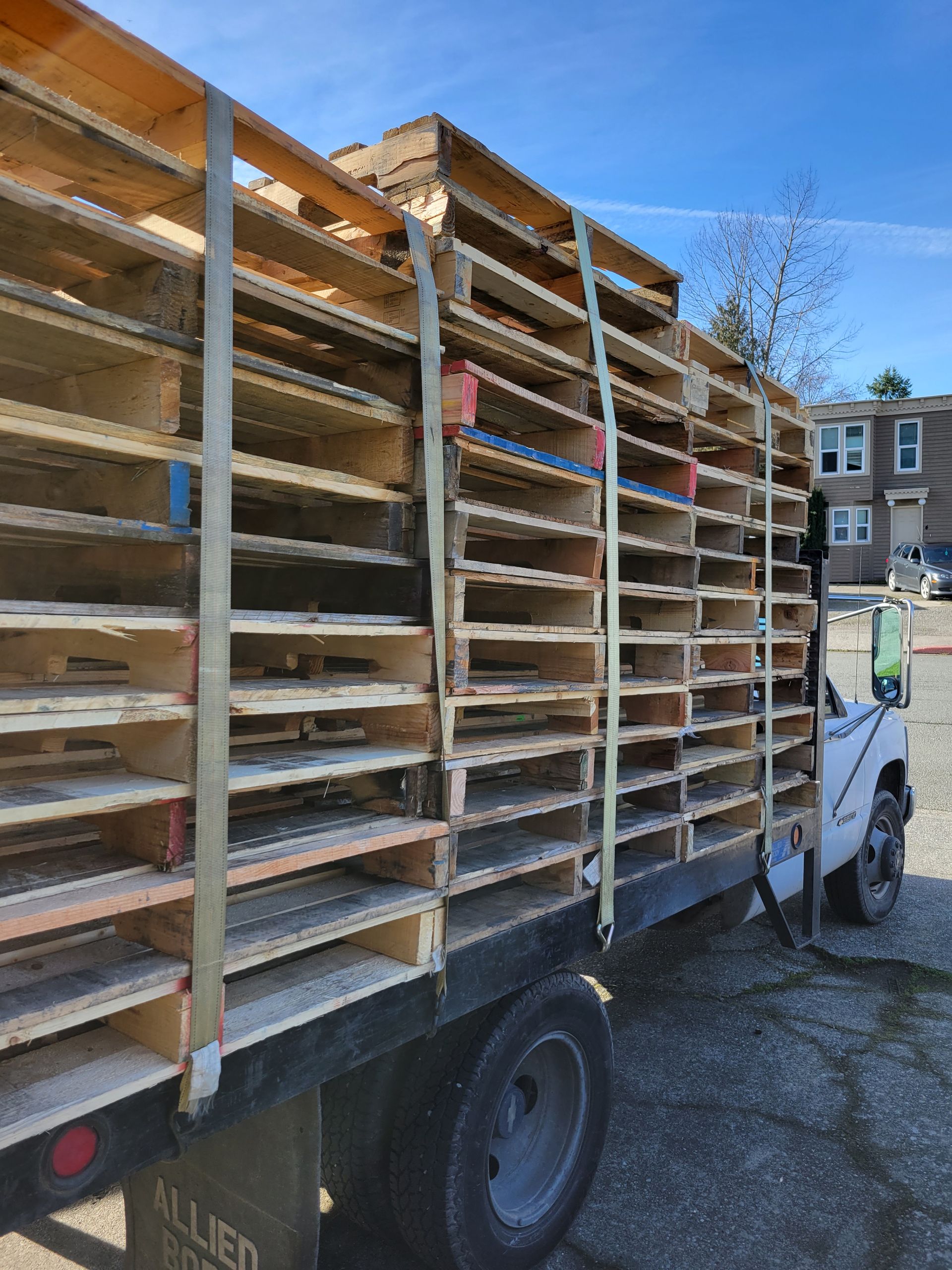
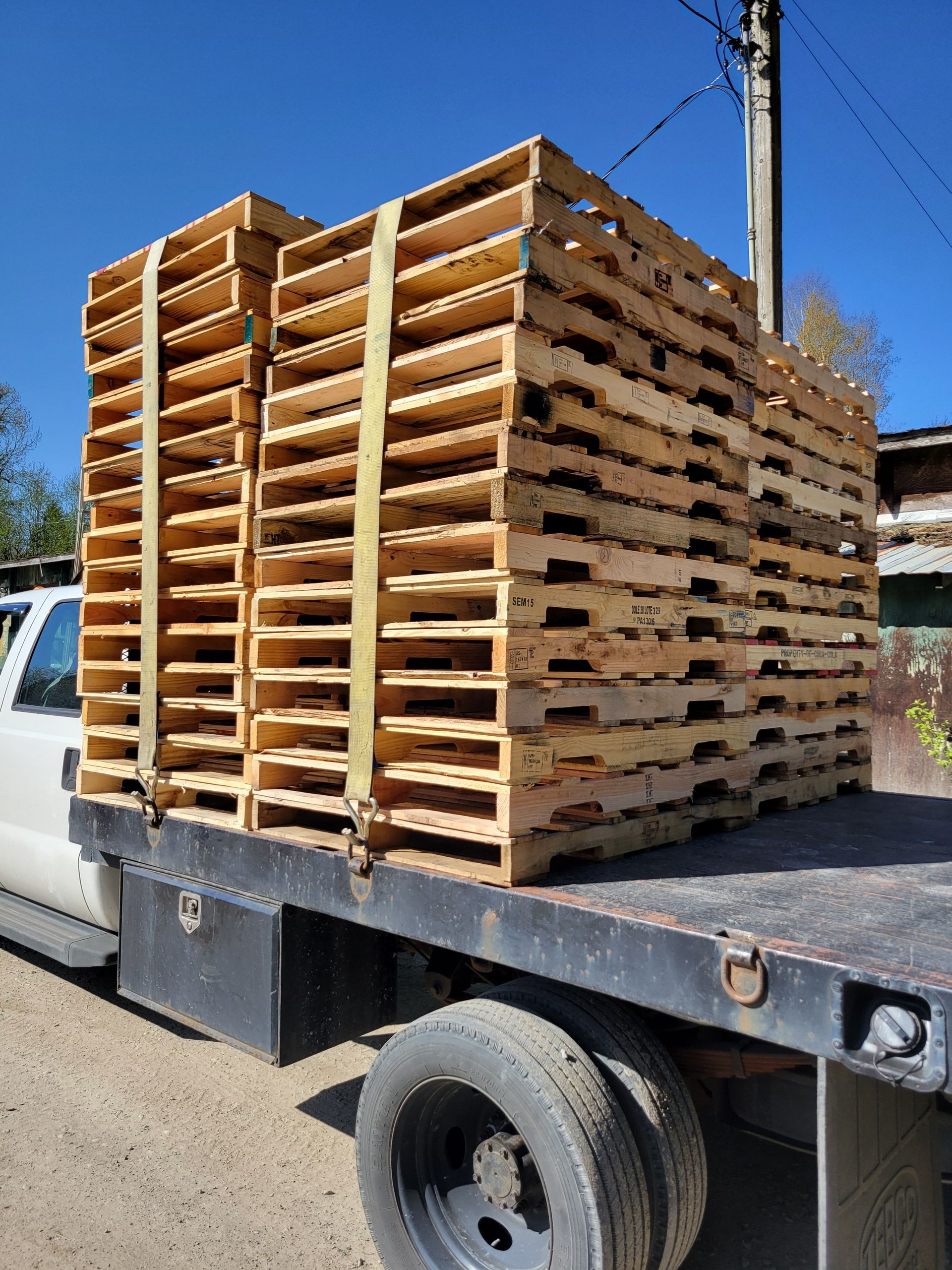
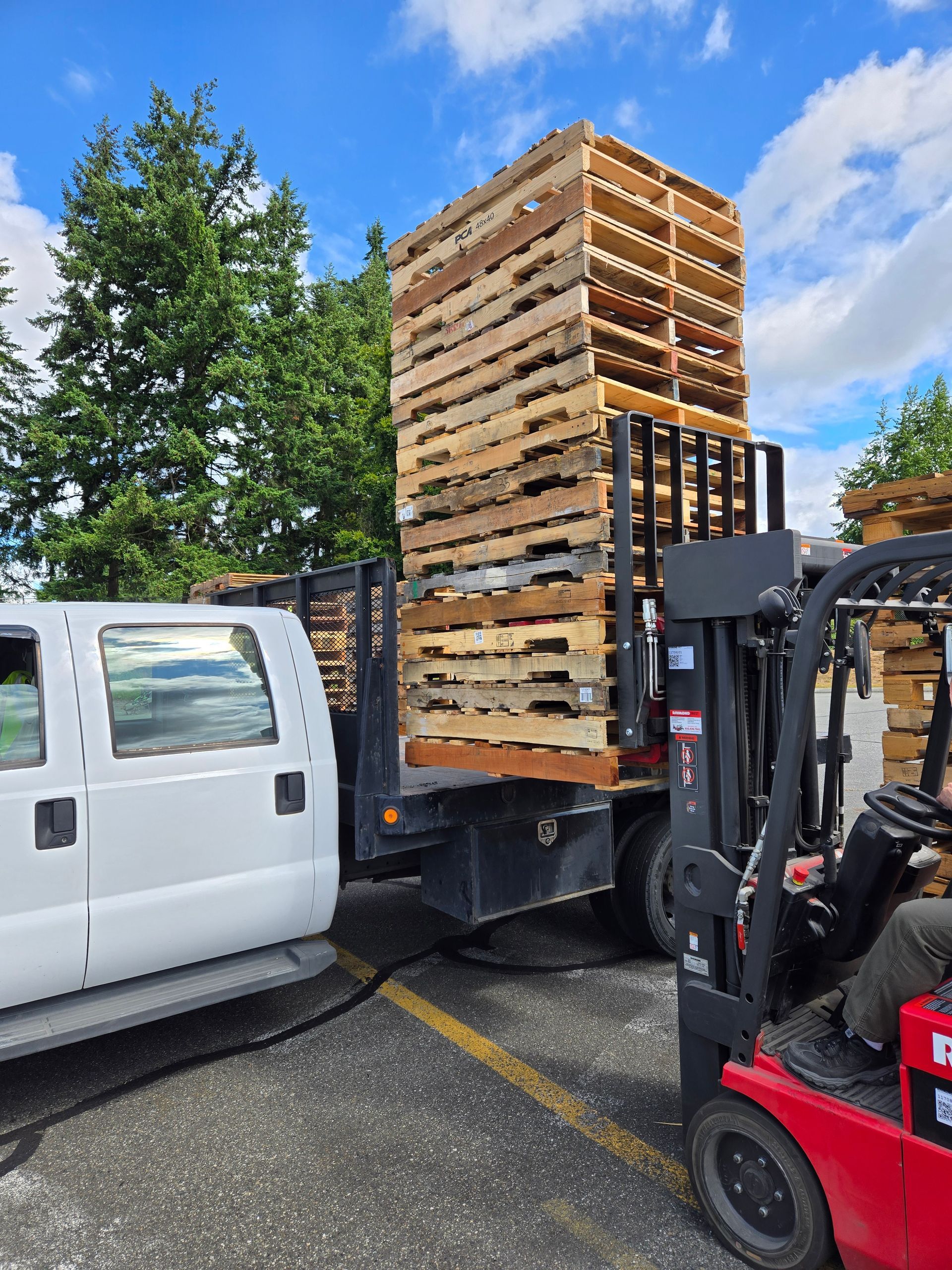
Most of the time it is fine. When it is not, the time to find out is while the driver is still standing there, not on Thursday when the pallets are already under product and a container is waiting. This is a short guide to what is worth looking at in those ninety seconds, written for anyone taking in used 48x40 pallets at a dock in North King, Snohomish or Skagit county.
Start underneath
The most useful thing to know about a used pallet is that its grade is decided underneath it.
Running along the bottom of a 48x40 are three 2x4s called stringers. They are what the pallet stands on and they carry the load. The deck boards on top get most of the attention because they are what you see, but a pallet fails at the stringer.
That is why the grades work the way they do. A #1 is a used pallet whose stringers have never been repaired. A #2 is one where a damaged stringer has been repaired with a block, a piece of wood cut and nailed in against the break to make it solid again. A #2 costs less because of that repair, and for most work it is a perfectly good pallet.
Either grade can carry a replaced deck board. When a #1 has one, you can usually pick it out because the new board is cleaner and newer looking than the ones around it. That does not make it a #2. This is the thing that trips people up most in the pallet business, and it is worth saying plainly: a pallet that looks worn is not automatically a lower grade, and a tidy one is not automatically a higher one.
So the first check is the three stringers on a few pallets off the top of the stack. If you ordered #1 and you are looking at blocks nailed into stringers, you did not get what you ordered.
Then check the load against the order
Obvious, and skipped constantly.
Count the load, or a representative part of it if the count is large. Then confirm the footprint is 48x40 and the grade matches what you asked for. It takes a minute, and it is the one minute in the week when a miscount is still fixable by somebody other than you.
Smell it
This sounds like a joke and it is not.
A pallet that has been sitting outside in Washington weather carries water, and water in wood carries mold and odor. If the goods going on top are packaging or anything a customer eventually opens, a musty pallet becomes your problem the moment it leaves your building.
Wet wood is heavier and darker than dry wood, and you can often see the line where a stack sat in standing water. Pallets kept indoors do not arrive with this problem, which is why where they were stored is worth asking about, and not only what grade they are.
Look at the nails and the stringer ends
Two quick things that take a few seconds each.
Nails standing proud of a deck board will catch and tear whatever is stretch-wrapped over them. A nail that has backed out is also telling you the board around it has loosened.
The stringer ends, where the forks go in, take the most abuse in a pallet's life. Splitting there is the most common way one fails in use, and it is visible from the aisle without turning anything over.
Know what happens if you reject one
The last check is not on the pallet. It is on the arrangement behind it.
Before you sign, know what your supplier does about a pallet you cannot use. Whatever that answer is, it decides who carries the risk on the bad one, and you want to know it on a quiet day rather than on the day it matters.
Here, the answer is that anything missing your standard goes back on the next trip and is exchanged, no questions asked. Every delivery also leaves this yard with a few more pallets on it than were ordered, at no charge, which covers the odd one before it turns into a phone call. That is the point of it. A used pallet stops being a gamble when the yard carries the risk of the one that is wrong.
What this looks like from our end
Everett Pallets and More sells clean used 48x40 pallets, #1 and #2, sorted and stored indoors at the yard in Lake Stevens, just east of Everett. Stock turns over quickly here, so what arrives is fresh rather than aged yard wood.
$6 a pallet picked up, with no minimum quantity. $8 to $13 a pallet delivered across North King, Snohomish and Skagit counties depending on how many you need, and that per-pallet figure is the whole delivered price. There is no separate delivery charge behind it. Orders run from a single pallet up to over five hundred, and local deliveries are often same day.
If you want to know the grade before the truck leaves, ask. Somebody here will tell you which one is coming and why.
Monday to Friday, 8:00 am to 5:00 pm. (425) 610-8704
You might also like